Best Medical Billing Services in USA
Are you looking for better control over your revenue cycle? Your clinical expertise should not be lost in a billing workflow that treats every claim the same. Since every service has different billing needs, we control each one accordingly. Your patients need you, and your RCM needs us. We manage your billing and revenue cycle irregularities so your practice can concentrate on delivering quality care.
However, Our experts controls Dermatology medical billing, from coding and claim filing to denial follow-up and refunds.
In dermatology, skin diseases and related conditions are treated. It needs a stress-free practitioner. Your focus should be on spending more time caring for your patients to provide them with the best skin care, and ours should be on keeping your revenue cycle running smoothly. Right Billing Solutions detects all gaps and gives a dermatology medical billing solution to healthcare providers.
An E/M service, in addition to a destruction, biopsy, excision, or other procedure, is often involved in dermatology consultations. When documentation supports a separately identifiable E/M service, then Modifier 25 may be suitable.
It is necessary to validate the service mentioned on the claim with the specified diagnosis. During assessment, ICD-10 filing and thorough clinical documentation enhance claims. Every procedure is matched to its diagnosis before the claim is submitted.
Information about dermatopathology and Mohs surgery, including stages, tissue blocks, specimen data, diagnosis, and related services, can have a direct impact on payment. A centralized billing review is needed to maintain an optimized reporting system.
A denied dermatology claim typically points to a specific issue, such as missing paperwork, a diagnosis link, a modifier, or a bundled modification. We find the root cause, fix it, and monitor if the problem persists.
Excellent skin care is personal, and excellent billing should protect the time that enables it. Seldom does a dermatology schedule remain uninterrupted. Different payer regulations apply to skin cancer screenings, biopsies, visits for chronic conditions, and cosmetic consultations, all of which can be completed on the same day. RBS organizes these services into a single revenue cycle, improving accuracy without adding to your clinical team's workload.
Billing support for acne, eczema, psoriasis, rosacea, dermatitis, and skin cancer screening visits, including follow-ups and medication management.
Coding and billing for biopsies, lesion destruction, excisions, and related services documented during the encounter.
Review of surgical stages, tissue blocks, specimen details, and pathology documentation so that eligible services are reported completely.
Follow-up on unpaid claims, recurring payer issues, underpayments, and aging balances until they are resolved.
Dermatology income comes from more than office visits. Medical care, in-office procedures, Mohs surgery, pathology, and self-pay cosmetic services each bring in revenue, and each needs its own billing logic. RBS handles them together, giving your practice one dedicated team for the reimbursement work behind them.
Visits are coded from the documented evaluation and management. When a procedure happens the same day, we assess whether a separate E/M is supported rather than defaulting either way. The visit level follows documented medical decision-making or total time, and payer policies may add further requirements.
Procedure billing depends on technique, lesion count, size, and anatomic site. Common code families include 11102–11107 (biopsy), 17000–17004 (premalignant lesion destruction), 17110–17111 (benign lesion destruction), and 17311–17315 (Mohs surgery), each with its own reporting rules. Medicare contractor and payer policies may add further requirements.
Many dermatology practices also offer phototherapy, patch testing, injections, and cosmetic care. Medically necessary services go to insurance, while cosmetic services are generally patient-paid and kept separate. Documentation must show why a treatment is medically necessary, and coverage for phototherapy and similar services varies by payer.
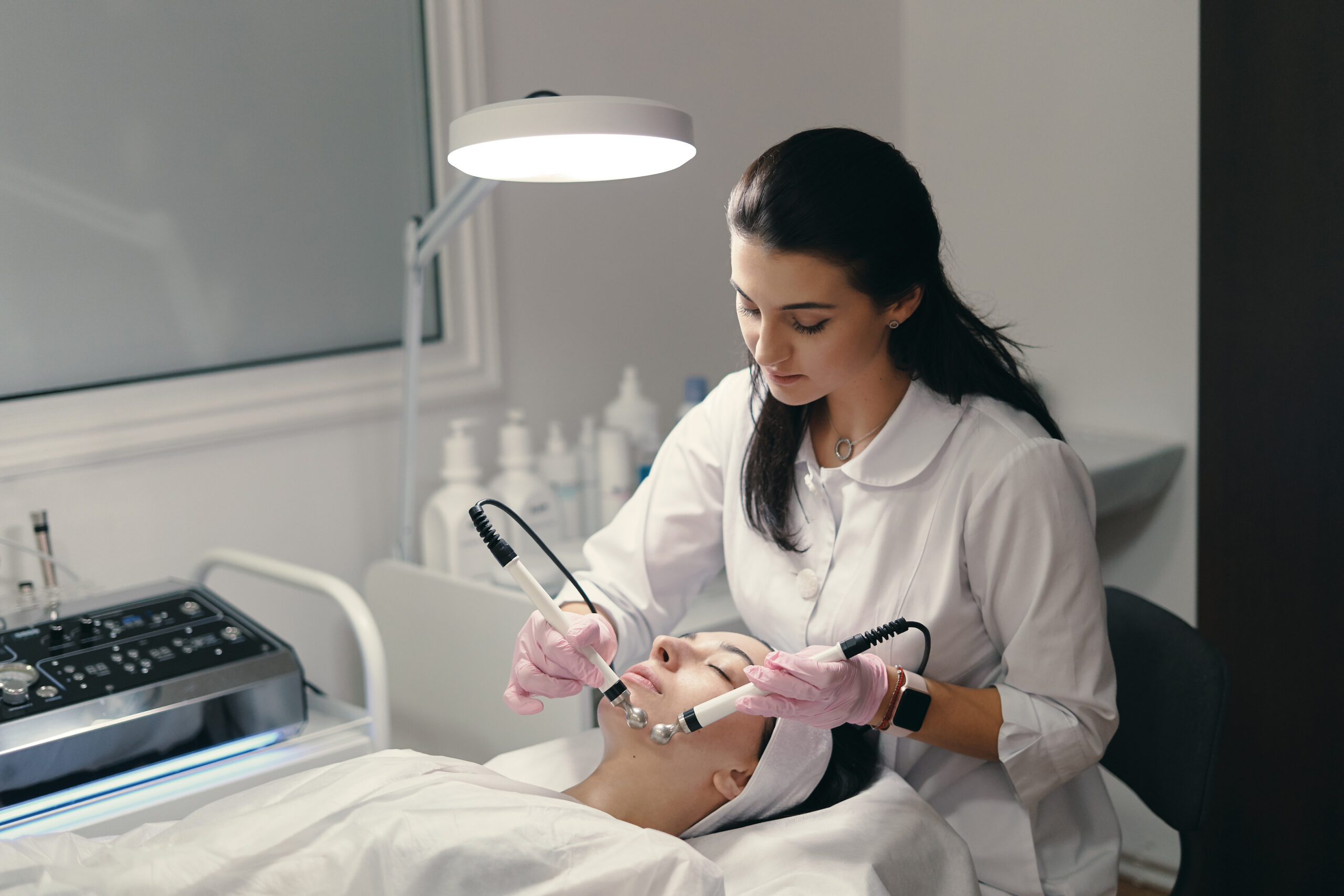
Both surgical and conservative cosmetic procedures are covered in dermatology. Therefore, it is important to manage, monitor, and prevent skin issues. Here we jump in; the Right Billing Solutions team of experts can relieve your anxiety regarding medical billing complexities in no time.
Claims in dermatology are impacted both before and after submission. Pathology results may take days to come, coverage may vary, and a visit may include both an examination and a procedure. Therefore, minor mistakes are detected, and they do not become denials because each stage feeds the next.
Dermatology claims are affected long before submission and long after it. Coverage can change, a visit can combine an evaluation with a procedure, and pathology results may arrive days later. RBS keeps each stage connected from scheduling to final payment. Each stage feeds the next, so small errors are caught before they become denials.
We confirm active coverage, benefit limits, referral needs, and authorization requirements before the patient is seen, especially for biologics and specialty treatments.
An evaluation, biopsy, and destruction can appear in one encounter. We review the note against the charges, CPT and ICD-10 codes, and modifiers.
Before a claim goes out, we check eligibility, payer criteria, diagnosis-to-procedure linkage, and modifiers to reduce avoidable rejections and payer adjustments.
The posting shows more than what was paid. It reveals contractual variances, patient balances, and underpayments worth challenging.
Denials often come from modifier use, medical necessity, bundling edits, or missing documentation. We find the real reason, correct it, and file supported appeals.
Unpaid claims are easy to lose track of on a busy schedule. We monitor aging balances and payer responses so recoverable revenue stays in view.
Patients come in worried about a mole, a rash that will not clear, or a diagnosis that needs answers. They deserve your full attention, not a practice distracted by rejected claims and payer calls. We handle the billing work once care is documented, from coding through A/R, so your team can stay focused on diagnosing, treating, and reassuring the patients in front of them.
Need broader revenue cycle management support? Our team can coordinate billing, coding, denial management, and A/R processes around your existing practice workflow.
Find quick answers about dermatology billing, coding, Mohs surgery, biopsies, cosmetic services, denials, and revenue cycle management.
It is the process of coding, submitting, and tracking claims for medical, surgical, and pathology services involving the skin, hair, and nails.
The expert Medical Billing Solutions provides strategic billing to improve collections and long-term profitability.
Yes, experienced billing assistance can include relevant claims for lesion excisions, Mohs surgery, destruction procedures, biopsies, and pathology-related services.
The wrong coding decisions can lead to revenue loss, claim denials, underpayments, and compliance risks.
Skin biopsy codes generally range from 11102 to 11107, depending on the biopsy technique and whether the procedure involves the first or an additional lesion.
When a significant, separately identifiable E/M service is documented on the same day as a procedure, beyond the usual pre-procedure evaluation.
Usually, codes 17311–17315 are used to report it by stage and anatomic site. Payer policies may impose additional criteria, and related pathologies and repairs are evaluated independently.
Codes depend on whether the lesion is premalignant or benign and on how many lesions are treated. Diagnosis linkage and documentation must support the code.
Generally no. Cosmetic services are usually patient-paid, while medically necessary treatments may be covered.
End-to-end medical billing & Revenue Cycle Management services for healthcare providers across the USA.